
At the Bank of the Philippine Islands (BPI), one of the country's oldest and largest banks, women are not a minority. Of its 23,580 employees, 65% are women, according to its 2025 Integrated Report. And through its microfinance arm, BanKo, the bank has made women entrepreneurs a central part of its push for financial inclusion.
A workforce led by women
BPI's strong representation of women is not new. In the Asiamoney Leaders for Women Survey 2020, BPI ranked first among five Philippine banks for women's share of the workforce, at 69%, and women held 52% of senior management positions.
Support for working mothers is part of the picture. In 2024, BPI said that about 50 of its employees become mothers each month. Alongside the 105 days of maternity leave required by law, the bank introduced maternity kits for each trimester, a mother's room at its head office, and free consultations with obstetrician-gynecologists. "At BPI, we consider our employees as part of our family," said Chief Human Resources Officer Gina Eala.
At board level, the picture is more modest. Three of BPI's 15 directors are women, above the board's own diversity target of at least two female directors, but down from five women on the board in 2014.
BanKo: lending to women micro-entrepreneurs
Outside the bank, BPI's biggest impact on women may come through BanKo, its microfinance arm. Since 2016, BanKo has supported more than 400,000 entrepreneurs, 68% of them women, and released more than ₱23.7 billion in loans in 2025 alone. Its NegosyoKo loans range from ₱5,000 to ₱500,000, and it serves more than 1.4 million clients through 412 branches.
One borrower, Madelyn Nayre of Baybay City, Leyte, grew her loans from ₱50,000 to ₱200,000 and now employs 15 people. "We celebrate the strength, resilience, and entrepreneurial spirit of mothers who are paving the way," said BanKo President Rod Mabiasen Jr.
"Economic participation is a critical step toward gender equality, as it empowers women and reduces systemic inequalities," wrote Marie Josephine Ocampo, BPI's head of mass retail products and chair of BanKo, in 2024.
Financial literacy in the community
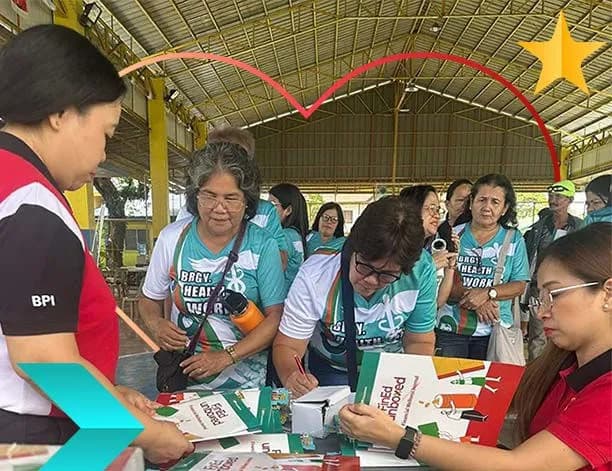
BPI has also taken its message directly to communities. In March 2026, its "Basta Babae, Wais!" program brought more than 300 women in Caloocan City together for a day of training on budgeting, saving, credit and fraud prevention, with attendees able to open accounts on the spot. "At BPI, we believe that empowering women with financial knowledge creates a ripple effect that strengthens families," said Ginbee Go, BPI's Head of Consumer Banking.
Why it matters
Women-led businesses make up a large share of Philippine micro, small and medium enterprises, but they are less likely to use formal financial services. An ADB study cited by Ocampo found that 17% of women-led MSMEs use a business account, compared with 39% of those owned by men. By combining a women-majority workforce, support for working mothers and targeted lending, BPI shows how a bank can close that gap from both sides. The next step will be publishing current data on women in senior roles and on pay, so that progress inside the bank can be tracked as closely as its lending.